
The French Revolution is known for being a period of political and societal change for France, but is it known for its change of fashion in Europe? Fashion and the arts were very important things in 18th and 19th century Europe, so how did the revolution change fashion and art forever?

When most people think about the fashion from the French Revolution they think of Marie Antoinette’s style. That style is known as Rococo or Late Baroque. Emerging in 1700-1720s France, the Rococo style was very extravagant featuring pastel colors and asymmetrical designs inspired by nature. But soon in the 1760s the Rococo style started to decline because the idea of a French Revolution promoted the ideas of liberty and republican values.
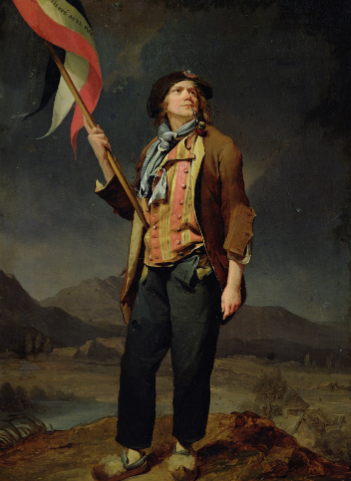
Welcome to the new style of fashion, Sans-Culottes. The term “Sans-Culottes” initially referred to men who wore long trousers instead of the knee breeches that were worn by the upper class. Some women even adopted the trousers worn by men. These trousers, along with other fashion trends associated with the working class, became a symbol of revolutionary fervor. Another Sans-Culottes look was called a chemise à la reine. The chemise à la reine was a loose-fitting dress with a high waistline and a flowing skirt resembling an undergarment. The dress was actually popularized by Marie Antoinette in the 1780s and paved the way for more natural styles of dress in the 19th century. When the French Revolution ended on November 9th, 1799, a new fashion trend started to emerge.
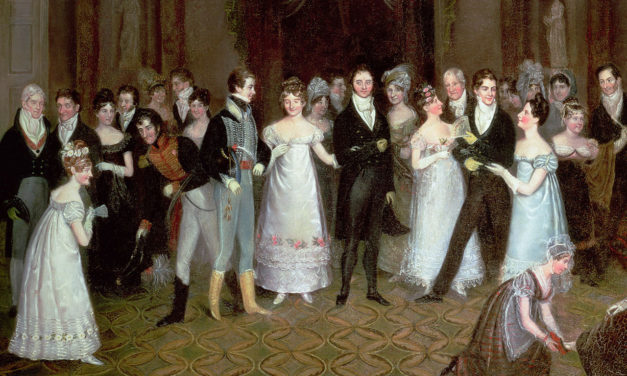
After the war, the post-revolution period saw the rise of Neoclassical fashion. Neoclassical fashion was heavily influenced by the art and architecture of ancient Greece and Rome. Neoclassicism emphasized clean lines, flowing drapery, and a focus on the human silhouette. Women wore dresses that were inspired by tunics worn by women in Ancient Greece. These dresses featured high waists, empire waistlines, and flowing skirts made from lightweight fabrics like muslin or silk. Men wore tailored three-piece suits with tailcoats, waistcoats, and breeches or pantaloons. It was also usually styled with high-collared shirts and other accessories like hats too. Neoclassical fashion made a lasting impact that extended far beyond the post-revolution period. Even today Neoclassical fashion can still be seen in evening gowns, tailored suits, and the popularity of the “empire waist”. The French Revolution’s impact on fashion has extended far beyond the Revolution period itself. The Revolution’s use of clothing as a political tool continues to serve as a constant reminder of the revolutionary ideals. The shift of fashion during this period reflected the changes of the political landscapes, fundamentally altering French fashion. The ideas of modern fashion such as emphasizing comfort, practicality, and elegance started to pop up more and more during and after the Revolution.
Works cited: Gachman, Dina. “The Fashion Influencers of the French Revolution (Published 2024).” New York Times, 29 Apr. 2024, http://www.nytimes.com/2024/04/27/books/booksupdate/anne-higonnet-liberty-equality-fashion.html. “How Did French Revolution Affect the Fashion in This Days – JD Institute.” JD Institute of Fashion Technology, 5 July 2024, http://www.jdinstitute.edu.in/how-did-french-revolution-affect-the-fashion-in-this-days/.
Annabelle is a 7th grade student at Shaler Area Middle School and a writer for the SAMS Salmon. She enjoys history, musicals, reading, writing, playing her oboe and flute, listening to music, drinking ice tea, and watching movies.

 The SAMS Salmon