
Written by Teddy Grzybowski
Mental health and the acceptance of talking about it have grown over the years. The most common being depression and anxiety, but there are many more that aren’t talked about and need more research done about them, why they happen, and how the human mind works.

Cotard’s Syndrome
Cotard’s syndrome is extremely rare; there are only 200 worldwide documented cases. It’s often combined with severe depression and mostly happens in women. Cotard’s syndrome, also nicknamed “Walking Corpse Syndrome,” is when the person affected is convinced parts of their own body are missing or that they are dying, dead, or don’t exist. They may think nothing exists. People with Cotard’s syndrome often become less social and sometimes may stop speaking at all. Some may hear voices since Cotard’s syndrome can be combined with schizophrenia. Often, they may refuse to eat because they think they are dead or that life has no meaning
There are very few cases in public, but a man named Per Yngve “Pelle” Ohlin, also known as “Dead” by his stage name, was part of a black metal band in the late 90s. He reportedly slept with dead crows under his bed and buried his clothing to smell like decay. In Pelle’s case, it may have been triggered by a near-death experience when he was clinically dead for 20 minutes before being resuscitated.
Alice in Wonderland Syndrome (AIWS)
Alice in Wonderland syndrome, or AIWS, is a brain-related condition that disrupts how you perceive your own body, the world around you, or both. This condition makes you see things smaller or larger than they actually are, much like in the book it’s named after; it distorts your sense of reality. It can be temporary or treatable, though it’s rare. Bizarrely, up to 30% of teenagers experience brief episodes of AIWS, but there’s not enough research to determine why this happens and why some only experience episodes instead of it happening all the time. From 1955 to 2016, fewer than 200 cases lasted long enough to do a proper assessment and were serious enough to seek medical care.
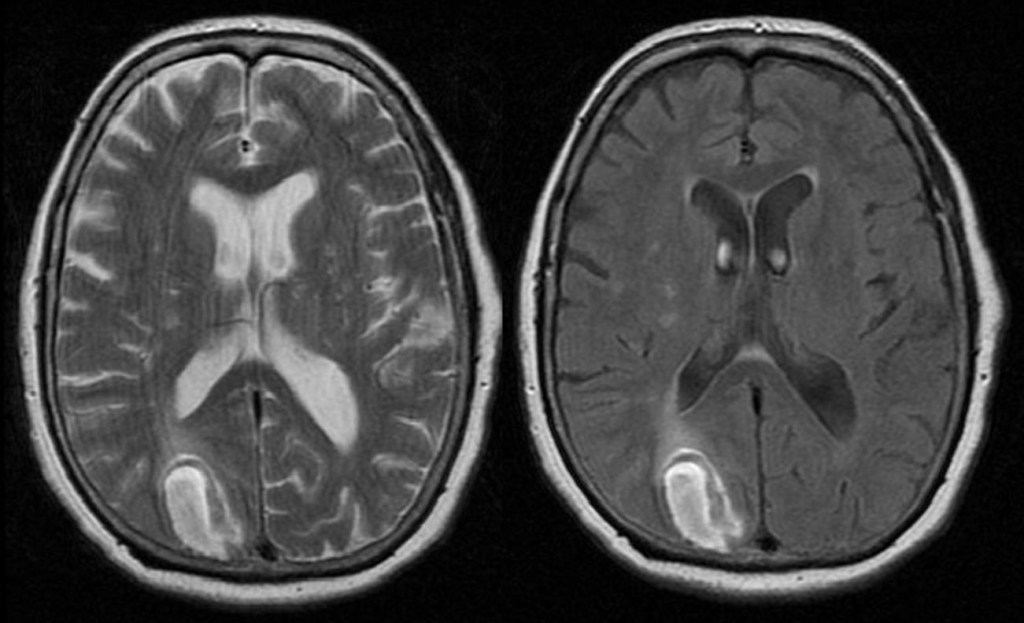
Experts disagree about the exact criteria and symptoms for the condition. Currently, there’s no accepted criterion for AIWS, so it is often diagnosed based on professional opinion. There are many things that contribute to a diagnosis, such as derealization, depersonalization, and visual perception. Possible causes are migraines, seizures, schizoaffective disorder, and depressive disorders. It can also happen because of medications, drug hallucinations, brain tumors, or degenerative brain diseases.
Body Integrity Identity Disorder (BIID)
BIID, or body integrity identity disorder, is a mental illness where the affected believe a perfectly healthy limb or body part shouldn’t be a part of their body. The affected knows the body part is healthy—they can move it, feel it, and use it—but they don’t believe it should be there. They want to live a life without that body part. In many cases, the person will seek out amputation from a medical provider. In other cases, some may attempt self-amputation, which is extremely dangerous. Often affected body parts are legs, arms, fingers, eyes, ears, and teeth. Research has found that the most commonly affected limb is the left leg, specifically, as patients have said they view their right leg as useful while the left one is not.
There’s no exact known number of diagnoses because many try to hide their symptoms out of embarrassment or don’t seek treatment. Symptoms vary but commonly include a desire to be disabled or live without that body part, discomfort with that body part, isolation, behaving like you have a disability, and sometimes self-harm. It’s hard to know exactly what causes BIID, but doctors theorize structural abnormalities in the brain that regulate bodily perception, possibly in the somatosensory cortex, parietal lobe, and insula.
Oddly enough, if the body part is removed, they may experience phantom limb syndrome, which is where you can feel a limb that is not there. One question is whether amputation can “cure” BIID. That’s difficult to answer because amputation may fulfill the desire and may not be fully regretted, but life may still be difficult and stressful. Amputation for BIID is extremely controversial in healthcare because of the “do no harm” principle, the possible lifelong consequences, and even death as a result of treatment. Less than 400 cases are known, and a rough estimate of the population that has it is 0.7% to 2.4%.
Capgras Syndrome
Capgras syndrome, or Capgras delusion, is a rare psychological disorder where someone believes a family member or friend is an imposter. It is categorized as a delusional misidentification syndrome. Capgras syndrome may be a complication of multiple neurodegenerative diseases or mental health conditions. Someone with Capgras syndrome may become upset or confused and may avoid communicating with the person they believe is an imposter.
Some research suggests that Capgras is caused by a disconnect between the temporal lobe, which handles facial recognition, and the amygdala, which handles your emotional response when recognizing someone. In Capgras syndrome, you may recognize a person but not believe they are the same person you love and trust. About 0.12% of the population has Capgras syndrome.
Is There a Cure?
The short answer is no. Mental illness is not a disease or virus that can be erased. In the 1940s and 50s, treatments included cutting the frontal lobe or locking someone in a padded room, but psychology has come a long way since then. Many people still treat mental illness as taboo or believe it doesn’t exist. In the syndromes listed, there are often changes in brain matter. You can go to therapy and take antipsychotics, but it won’t just disappear.
Many people deal with anxiety and depression. You will rarely meet someone who says they are happy to live with a mental illness, but you can learn to live with it and even improve your life. Mental illness is often genetic and not something to be ashamed of. There’s nothing embarrassing about reaching out for help for yourself and others. Part of the reason we don’t have much data on the four syndromes listed is not only that they are rare, but also because people feel ashamed to talk about what they are experiencing.
The main thing to take away from this article is that mental illness is not something to be embarrassed about. Just because you are struggling doesn’t mean your life is over. Many people live happy and fulfilling lives with depression, anxiety, ADD, ADHD, or schizophrenia. Despite what the media might say, you are not crazy, and you are not a lost cause.
 The SAMS Salmon